Singeing
Where open-flame practice is permitted, a quick pass chars hair and fiber off metal and masonry surfaces ahead of cleaning or inspection. Short passes, constant motion, clear surroundings.
Application · Farm & industrial
Farms and work sites run on heat as much as on fuel and steel. Hair and fiber singeing where open-flame practice is permitted. Ice that has welded a gate hinge or a machine coupling shut overnight. Bitumen that needs softening before a patch goes in. Metal joints that want preheat before the welder strikes an arc. None of these justify a trailer of equipment — they need one dependable flame tool on the truck.
ZHENTANZHE splits the category across two models of one platform. The GF-8012 Standard Torch 8012 — 60 cm, 860 g — is the close and mid-range workhorse: singeing tasks, de-icing assist on metal fittings, road-surface softening, welding preheat support. The GF-8016 Long-Reach Torch 8016 — 76 cm, 550 g — takes everything at a distance: row-edge and fence-line flame weeding, passes into awkward ground, any job where the operator should not be leaning in. Both flames are wind-resistant, adjustable, and rated up to ~1300°C and ~50 cm.
For farm-supply wholesalers, industrial distributors and municipal dealers the pair is a straightforward assortment: one factory, one QC story — 20+ tests per unit, factory under ISO 9001, TÜV, UL, CPSC and SGS certificates, the GF-8016 additionally on the CE list valid to 2028 — and two lengths covering the whole site. The -30°C to 30°C operating range is exactly why the category sells in cold seasons, when the de-icing assist and ignition jobs peak.
Fuel canister not included — purchase locally per local regulations. Professional tool, not a toy: read the manual before use and keep away from children. Site work follows the site's own safety rules.
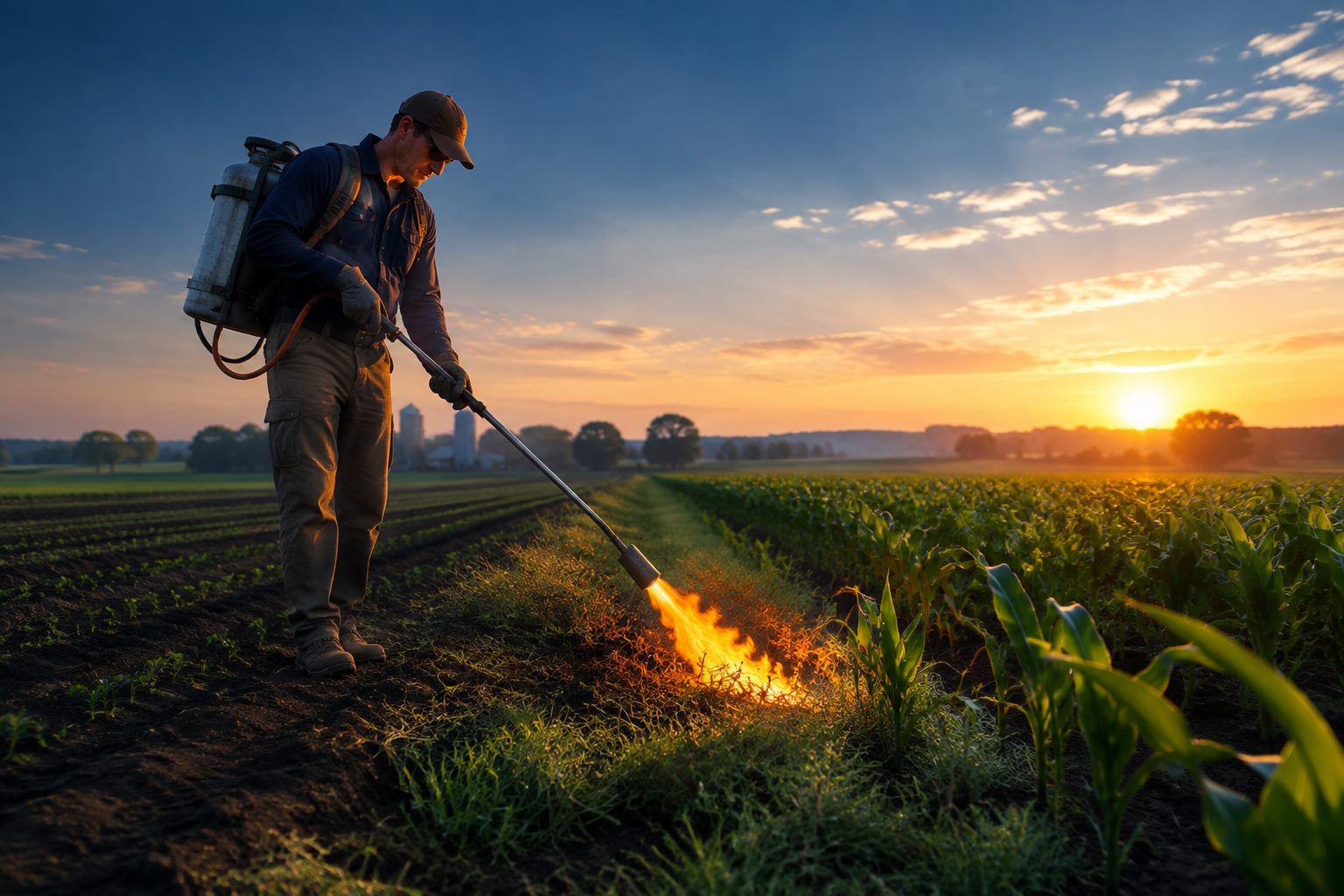
Professional tool, not a toy. Read the manual before use. Keep away from children. Site work follows the site's own safety rules. Fuel canister not included — purchase locally per local regulations.
The tasks
Each is a support task: the flame does the heating, the trade sets the method. That framing keeps your catalog honest and your customers safe.
Where open-flame practice is permitted, a quick pass chars hair and fiber off metal and masonry surfaces ahead of cleaning or inspection. Short passes, constant motion, clear surroundings.
A flame thins ice and frost from metal fittings, hinges, couplings and equipment surfaces so mechanisms open again. It is an assist for metal parts — never dwelled on glass, never a substitute for proper de-icing.
The flame softens bitumen and tar ahead of patching and crack preparation, following the crew's own method statements. Works outdoors where torches belong — ventilated, clear, supervised.
Warming metal surfaces and joints before the arc starts helps the welder's procedure do its work. The torch is the heat source; the weld procedure stays in charge of temperatures and sequence.
How it works
Farm and industrial users know hot work. Your job is to confirm the routine, not to invent it.
Confirm the site's hot-work rules first — permits where required, fire watch where assigned, flammables cleared to the prescribed distance before the first flame is lit.
Close and mid-range duty runs on the GF-8012; anything the operator should not lean into — row edges, fence lines, deep clearance work — goes to the 76 cm GF-8016.
Every task on this page is a passing job: the flame moves, the surface heats gradually, nothing dwells. Wind direction is checked before lighting, even with a wind-resistant flame.
Switch off, cool, store the canister away from heat per local regulations, and follow the site's close-out checks for hot work. The valve-linked auto shut-off cuts gas if the flame dies — supervision is still required.
Recommended models
Two lengths of one platform — the assortment decision is just the working distance.
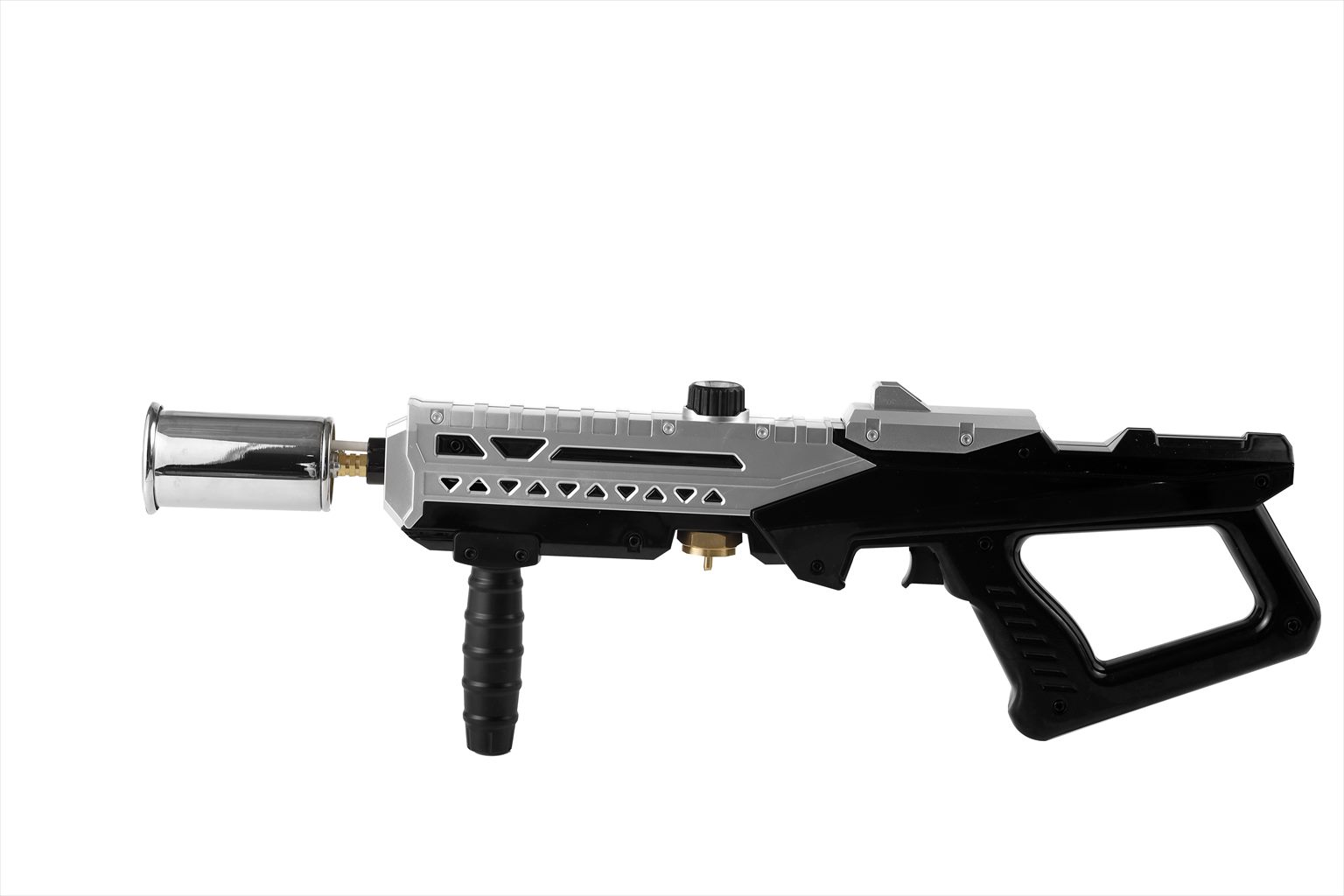
Close & mid-range duty
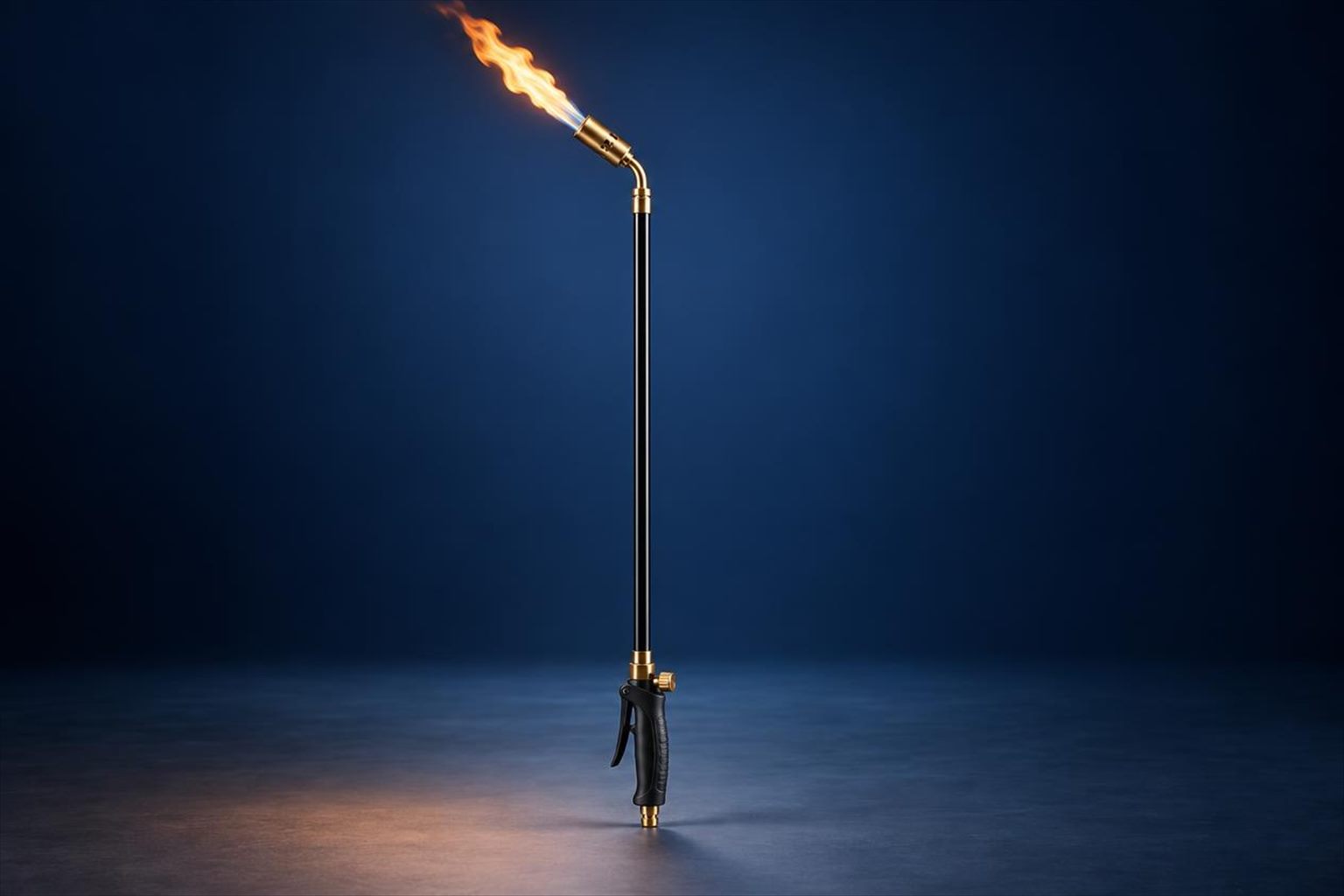
Distance duty
The weed-control workflow for the GF-8016 is detailed in the weed-control guide; the workshop side of the GF-8012 is in the DIY heat-work guide.
Buying guide
| Task | Recommended model | Working note |
|---|---|---|
| Singeing | GF-8012 | Short passes on metal and masonry where open-flame practice is permitted; clear surroundings first |
| De-icing assist | GF-8012 | Thin ice from metal fittings and couplings with a moving flame; never dwell on glass |
| Road-surface work | GF-8012 / GF-8016 | Soften bitumen and tar per the crew's method statements; outdoor, supervised work only |
| Welding preheat support | GF-8012 | Warm joints before the arc per the weld procedure; the welder owns temperatures and sequence |
| Row-edge & fence-line weeding | GF-8016 | 76 cm wand and up to ~50 cm flame keep ground-level passes at arm's length — see the weed-control guide |
| Common platform | Both models: electronic ignition rated 5,000+ ignitions; adjustable wind-resistant flame; valve-linked auto shut-off; triple protection (flame-out + over-pressure + backfire); operating range -30°C to 30°C; runtime ~1 h high / 3–4 h low on a 450 g canister. Fuel canister not included — purchase locally per local regulations | |
Safety notes
Professional tool, not a toy: read the manual before use and keep away from children. Follow the site's hot-work permits, fire-watch assignments and PPE requirements — the torch joins that system, it does not bypass it.
Clear fuel, straw, packaging and chemicals from the flame zone before lighting. Never dwell the flame on glass or let it drift toward people, animals or vehicles; the wind-resistant flame still deserves a wind check.
Fuel canister not included — purchase locally per local regulations. The -30°C to 30°C operating range covers cold-season work, but canisters are still stored per the manual and local rules, away from heat and out of direct sun.
Flame off, parts cool, canister stored, site checks signed. Workpieces stay hot long after the flame moves on — mark or cordon them until cooled, especially where foot traffic passes.
FAQ
Both, on one shelf. The GF-8012 Standard Torch 8012 (60 cm, 860 g) carries close and mid-range duty: singeing tasks, de-icing assist on metal fittings, road-surface work and welding preheat support. The GF-8016 Long-Reach Torch 8016 (76 cm, 550 g) takes the distance jobs — row-edge and fence-line weeding, passes into awkward ground. They share one ignition platform and QC routine.
It is an assist, not a snow tool: the flame thins ice and frost from metal fittings, gate hinges, couplings and equipment surfaces so mechanisms open and move. Keep the flame moving, never dwell it on glass, and let metal parts warm gradually rather than shocking them.
In road work the flame softens bitumen and tar surfaces ahead of patching and crack preparation, following the crew's own method statements. In welding support it preheats metal surfaces and joints before the arc starts, per the welder's procedure. Both are skilled trades' support tasks — the torch is the heat source, the trade sets the method.
The GF-8016 is on the CE certificate list, valid to 2028. The line is further supported by TÜV, UL, CPSC and SGS certificates, and the factory operates under ISO 9001, ISO 9994 and ISO 22702. Every unit passes 20+ factory tests before packing. Certificate copies are shared with RFQ requests.
On a 450 g canister the factory rating is about 1 hour on high flame and 3–4 hours on low flame, so a working day in the field is planned around spare canisters. Fuel canisters are not included — purchase them locally according to your local regulations.
Send models, quantities and target market — we reply with specifications, pricing, sample terms and lead time.