A non-chemical option
Households with pets, children and vegetable beds keep asking for a way to clear path and patio growth without spraying. Flame weeding answers with heat instead of chemistry.
Application · Weed control
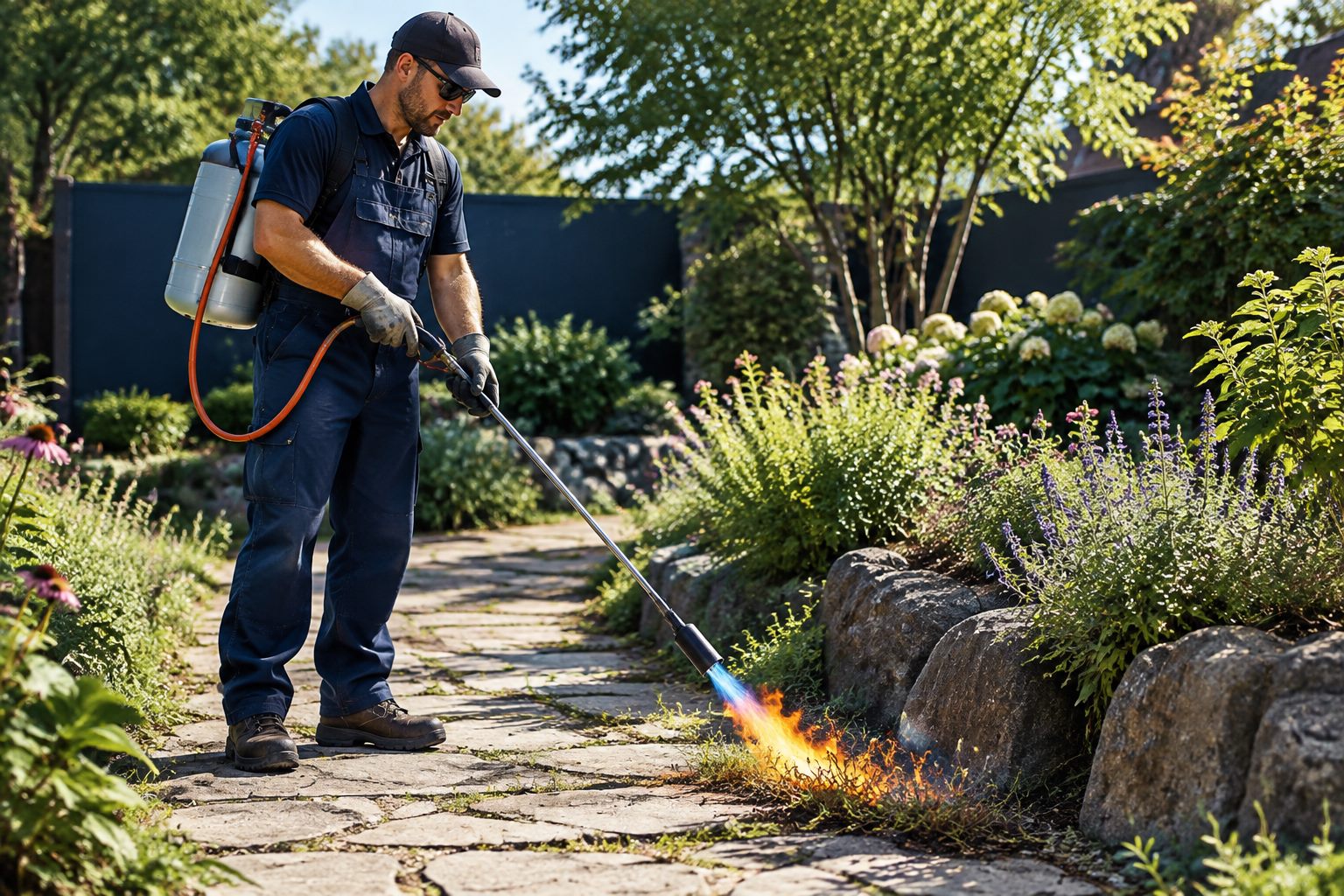
Thermal weeding is the non-chemical way to clear unwanted growth: a flame pass heats the foliage until the plant tissue wilts, and the weed dies back without any herbicide touching the ground. For a distributor, it is one of the clearest flame-tool categories to merchandise — the job is visible, seasonal and repeatable, and the tool is a single self-contained purchase. This guide explains the method, the working conditions and the workflow, so your retail copy and counter advice are right before the first unit ships.
The recommended tool for the job is the GF-8016 Long-Reach Torch 8016. Its 76 cm wand keeps the operator's hand about 76 cm from the burner during ground-level passes along paths, driveways, patio joints and fence lines, while the flame still reaches up to ~50 cm — so one sweep covers a band of foliage without bending or kneeling. At 550 g it is the lightest torch in the ZHENTANZHE line, which matters when the job is a long driveway rather than a single flower bed.
Buyers who stock the category are garden-tool distributors, farm-supply wholesalers, hardware chains and municipal-supply dealers. The GF-8016 shares the line platform — electronic ignition rated 5,000+ ignitions, valve-linked auto shut-off, triple protection, -30°C to 30°C operating range, CE certification valid to 2028 and 20+ factory tests per unit — so the weed-control SKU carries the same quality story as the rest of your flame-tool assortment.
Fuel canister not included — purchase locally per local regulations. Professional tool, not a toy: read the manual before use and keep away from children. Check local regulations on open-flame use before flame weeding.
Professional tool, not a toy. Read the manual before use. Keep away from children. Check local regulations on open-flame use before flame weeding. Fuel canister not included — purchase locally per local regulations.
The pain points
Three frustrations keep thermal weeding on shopping lists year after year — and they are the three claims your shelf copy should answer.
Households with pets, children and vegetable beds keep asking for a way to clear path and patio growth without spraying. Flame weeding answers with heat instead of chemistry.
Hand-weeding gravel, paver joints and fence lines is slow and hard on knees and backs. A standing flame pass treats a band of growth in one sweep.
Cracks, edges and fence lines are exactly where a long wand outperforms short tools — the reach does the bending instead of the user.
How it works
Four rules cover almost every correct use. Put them on your packaging insert and your returns rate will thank you.
Dry foliage on a dry, wind-still day takes the heat pass properly — damp or wet growth wastes fuel, and wind pushes the flame where it does not belong. Confirm local rules on open-flame use before you start.
Seedling-stage weeds respond to a short pass. Large, established perennials are managed with repeat passes over successive regrowth — set that expectation with buyers up front.
Hold the flame a short distance from the foliage and sweep it slowly side to side. The aim is to wilt the tissue, not to char plants to ash — a wilting pass is the correct technique and the economical one.
Work away from your body, keep people and pets clear of the working band, and mind what sits behind the weeds — dry fences, mulch, buildings and vehicles all stay outside the flame path.
Recommended model
One model is purpose-shaped for this job. The rest of the line stays in the background as cross-sell.
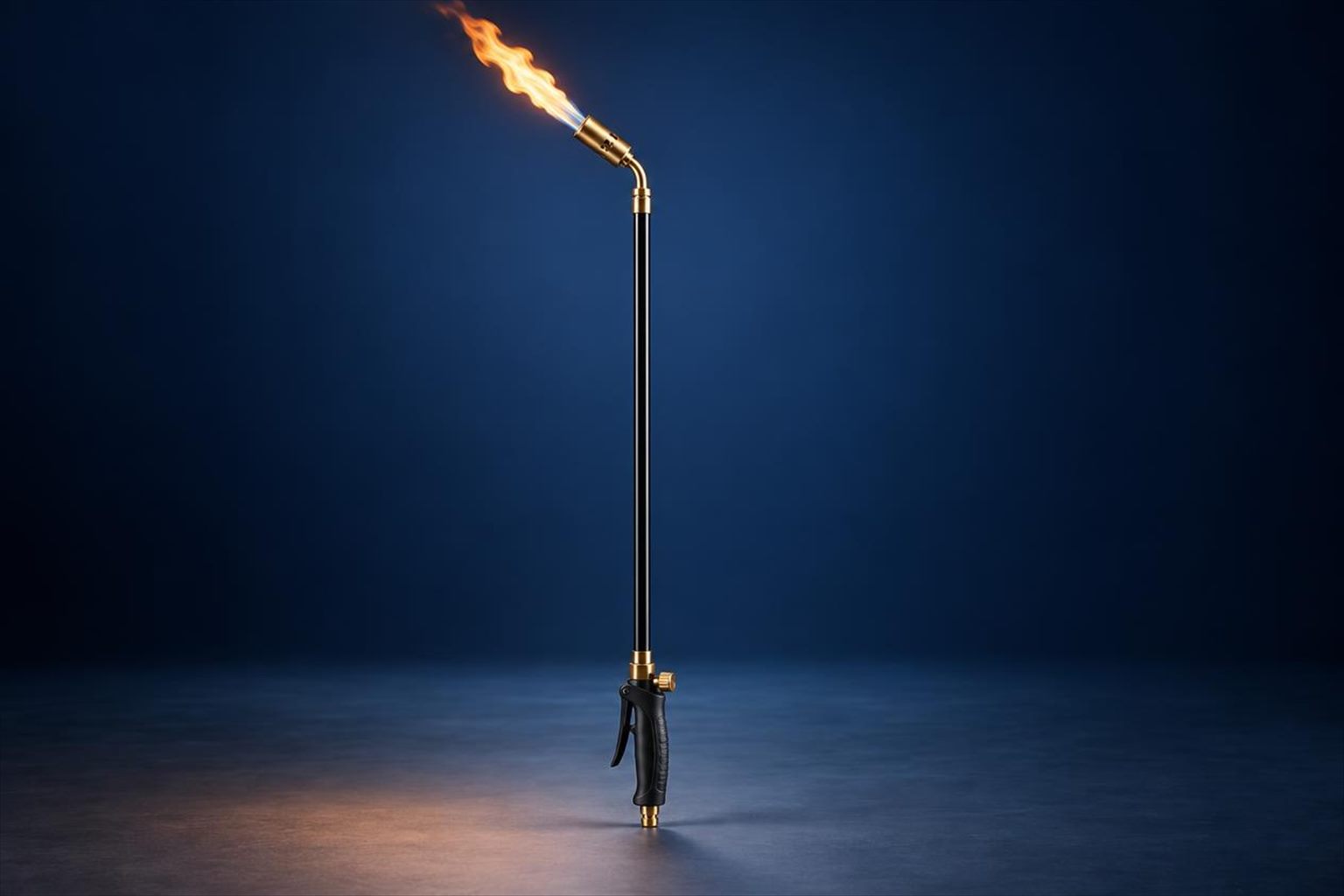
Weed-control lead model
The 76 cm wand is the whole argument: ground-level foliage is treated without bending, kneeling or reaching into flower beds, and the 550 g body keeps longer sessions manageable. The wind-resistant, adjustable flame lets the operator throttle down for tight paver joints and up for fence-line bands.
For the channel, the GF-8016 is CE certified (valid to 2028), passes 20+ factory tests per unit, and shares its ignition platform with the rest of the line — so garden shelves can sit next to BBQ or farm SKUs from the same factory story. It is equally at home in the farm and industrial scenario and as a premium charcoal lighter in the BBQ scenario.
Working data
| Parameter | Factory-rated value |
|---|---|
| Wand length | 76 cm |
| Net weight | 550 g |
| Flame temperature | Up to ~1300°C |
| Flame length | Up to ~50 cm (±10 cm with altitude, pressure and temperature) |
| Flame control | Adjustable knob; wind-resistant flame |
| Ignition | Electronic, rated 5,000+ ignitions |
| Operating range | -30°C to 30°C |
| Runtime (450 g canister) | ~1 h on high flame; 3–4 h on low flame |
| Safety platform | Valve-linked auto shut-off; triple protection: flame-out + over-pressure + backfire prevention |
| Certification | CE (valid to 2028); TÜV, UL, CPSC, SGS; factory under ISO 9001 |
| Fuel canister | Not included — purchase locally per local regulations |
Safety notes
Professional tool, not a toy: read the manual before use and keep away from children. Check local regulations on open-flame use — some areas restrict flame weeding or require permits. Clear the area of dry combustibles and keep a water source or extinguisher within reach.
Keep people and pets clear of the working band; never point the flame at people, animals or flammable goods. Never leave a lit torch unattended — the valve-linked auto shut-off cuts gas when the flame goes out, but supervision is still required. Let the nozzle cool before storage.
Fuel canister not included — purchase locally per local regulations. Fit and remove the canister away from open flame, and check the joint for leaks as described in the manual before each session.
Present flame weeding as a repeat-pass method on young, dry growth. Claims of permanent one-pass elimination mislead buyers and generate complaints; the honest workflow sells better and returns less.
FAQ
Yes in method: thermal weeding uses a flame pass to wilt plant tissue, so no herbicide is applied by the tool itself. It is still an open-flame method — check local regulations on open-flame use before starting, and keep the flame away from dry fences, mulch and buildings.
Best practice is a dry, wind-still day on young, seedling-stage growth: dry foliage takes the heat pass properly, and young plants respond to a short sweep. Expect thermal weeding to be a repeated-pass method — regrowth, especially from perennial roots, is treated again on later passes.
The long wand keeps your hand about 76 cm from the burner while the flame still reaches up to ~50 cm, so ground-level passes stay at arm's length. At 550 g it is the lightest torch in the line, which helps on longer sessions. Flame length varies by about ±10 cm with altitude, pressure and temperature.
No, and honest retail copy should not claim it. The heat pass wilts treated tissue; annual seedlings usually need no more than the pass itself, while deep-rooted perennials regrow and are managed with repeat passes. Present it as a repeat-pass method and your customers will use it correctly.
It runs on butane or high-altitude canisters with a European valve interface; other canister types need an adapter. Fuel canisters are not included — purchase them locally according to your local regulations.
Send quantity and target market — we reply with GF-8016 specifications, pricing, sample terms and lead time.