What Is a Butane Torch Lighter and How It Works
What a butane torch lighter is, the parts that matter and how the flame is produced.
Written by the factory, not a content agency
This knowledge hub collects everything we know about butane torches, flame weeding and portable gas burners into one library — written by the same Wenzhou factory that builds the products. Every technical figure in these guides comes from our own factory-rated specifications: up to ~1300°C flame temperature, up to ~50 cm flame length, 5,000+ rated ignitions and a -30°C to 30°C operating range. When a guide states a number, it is a number we test to, unit by unit, before anything ships.
The library is organized into four categories. Knowledge guides answer the basic questions — what a butane torch is, how thermal weeding works, how to store canisters safely. Comparisons put the real decisions side by side: butane versus propane, flame weeding versus herbicide, factory direct versus trading company. Tools & Charts are the reference pages buyers keep open — flame temperature charts, canister compatibility guides, buying checklists and seasonal weeding calendars. Buying & OEM covers the commercial side: importing from China, MOQ logic, sampling, pre-shipment inspection, payment terms and the rules for the US and EU markets.
The hub serves three readers. Importers and distributors use it to shortlist models and prepare quotations. Brand owners use the OEM articles to plan a private-label launch from 500 pcs. E-commerce sellers use the comparisons and checklists to write listings that answer customer questions before they are asked. Each guide links back to the model, application or process page behind it, so a question that starts as research can end as a quote.
One note before you browse: these are professional flame tools, not toys. Guides that cover use also cover the safety rules — read the manual, mind local fire regulations, keep tools away from children. Fuel canisters are sold separately everywhere; purchase them locally according to your local regulations.
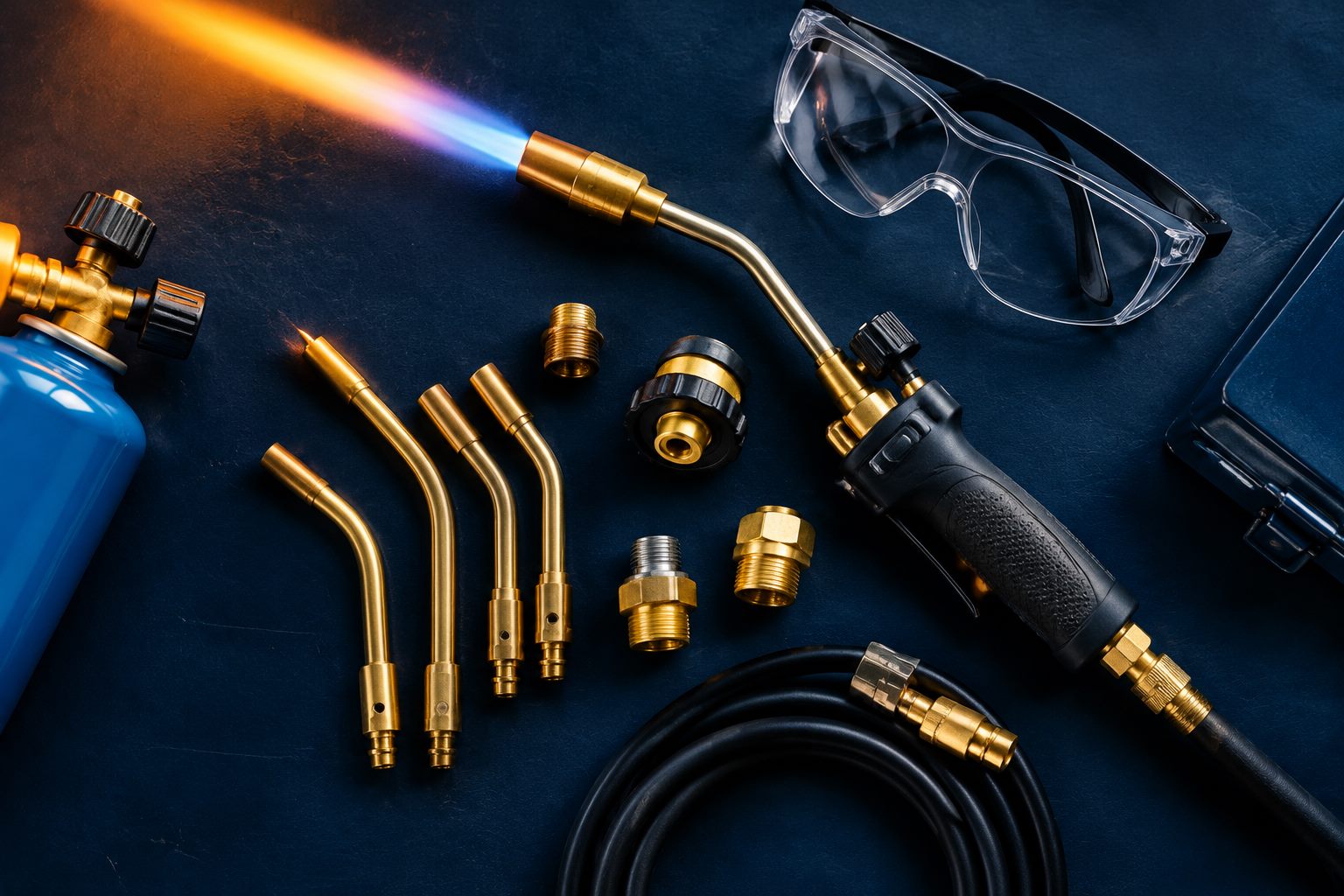
Professional tool, not a toy. Read the manual before use. Keep away from children. Fuel canister not included — purchase locally per local regulations.
Categories
Pick the category that matches your stage: learn the category, compare the options, keep the reference charts, then work the buying process.
| Category | Guides | What you will find |
|---|---|---|
| Knowledge | 30 | What things are and how they work — torch types, ignition, valves, flame behavior, storage and safety rules. |
| Comparisons | 20 | X versus Y decisions — fuels, tools, methods and buying channels, each ending with a clear "choose this when". |
| Tools & Charts | 20 | Reference material worth bookmarking — temperature charts, compatibility guides, checklists and calendars. |
| Buying & OEM | 30 | The commercial path — importing, MOQ, samples, inspection, payment terms, incoterms and market rules. |
All guides
Filter by category, or scroll the full list. Each card opens the guide; guides link onward to the model, application or process page behind the answer.
Showing 100 of 100 guides.
What a butane torch lighter is, the parts that matter and how the flame is produced.
How thermal weeding works and where a flame pass replaces herbicide.
Kitchen torch basics: typical culinary jobs and what to check before buying.
How butane stores, vaporizes and burns inside a refillable torch.
What a charcoal starter torch is and how it speeds up grill prep.
How flame temperature figures are measured and what rated values really mean.
Who needs a long reach lighter and how reach changes the work.
Indoor use rules for butane torches: ventilation, clearance and common mistakes.
How electronic ignition fires and why it is rated in ignitions.
Thermal weeding explained: the chemical-free weed control method step by step.
Safe canister storage: temperature, position and shelf-life rules.
What a portable gas burner is and how it differs from an ignition torch.
Lighting charcoal without fluid: the torch method from top to bottom.
Refilling a butane torch step by step, with the checks that prevent leaks.
What backfire protection does inside a gas torch and why it matters.
Dry-weather flame weeding: the fire rules to check before you start.
Why multi-head burners spread heat more evenly for group cooking.
What factory testing covers before a gas torch ships.
What CE paperwork means for torch buyers and which models it covers.
Safe kitchen torch habits for home cooks, in one practical guide.
What makes a torch flame wind-resistant: the design basics explained.
Correct ignition and flame adjustment, knob by knob.
Whether a butane flame is food safe: the culinary facts.
Burn time facts: what a canister delivers on high and low flame.
How heat loosens old paint coats and where torches fit the job.
A torch that will not light: common causes and simple fixes.
What cold weather changes for butane torches and how to work around it.
How the valve controls flame level and cuts gas when the flame goes out.
Travel rules for butane torches and canisters before you fly.
Maintenance habits that keep ignition and seals working longer.
Butane and propane compared for torch work: temperature, cost and handling.
Flame weeding versus herbicide on cost, safety and results.
Which browns better: a kitchen torch or the oven broiler.
Torch or heat gun for paint stripping: where each one wins.
Sourcing torches in China: factory direct or through a trading company.
Weed torch and string trimmer compared: which works where.
Gas torch or charcoal chimney: lighting speed and handling compared.
Picking torch length: compact control or long-reach distance.
Burner setup and cookware planning for group meals at camp.
OEM and ODM compared: which cooperation model fits your brand.
Butane versus isobutane for torches and stoves.
Refillable and disposable lighters viewed over a lifetime of cost.
How B2B torch buying differs from retail: MOQ, terms and support.
Gas burner or campfire for outdoor cooking: control, fuel and rules.
Torch flame versus soft flame lighters: the practical differences.
Butane torch or electric igniter for charcoal grills.
Flame weeding and mulching as farm weed strategies.
Brass and stainless steel in torch and burner construction.
Buying torches in bulk: factory direct versus marketplace.
Five-head burner versus single-burner camp stoves.
Flame temperatures by fuel and use case, in one reference chart.
Which canisters fit which torches, valve types and adapters.
A buying checklist for importers: specs, tests and documents.
CE, UL and ISO paperwork explained for torch buyers.
HS classification for torch lighters, with the caveats that matter.
Packaging and carton specs to confirm before export.
A seasonal calendar for planning flame weeding work.
Searing temperatures for kitchen torch users at a glance.
Estimating gas needs for a camping trip, with worked examples.
An OEM project checklist from logo approval to container loading.
What to review in a torch factory audit, room by room.
AQL sampling for torch imports explained in plain terms.
Four torch and burner models compared in one chart.
Matching flame reach to the task, from kitchen to fence line.
What to wear and carry for flame weeding work.
The export document set for gas torch shipments.
Buyer glossary: the terms used in torch specifications.
EU standard valves and the adapters other canisters need.
Landed cost for imported gas torches, line by line.
What flame color signals about fuel, air and valve condition.
Importing torch lighters from China, step by step.
Why 500 pieces is a common MOQ start for torch orders.
The OEM manufacturing process from drawing to delivery.
Verifying a torch supplier before money moves.
Logo and branding options for custom torch orders.
How to request samples from a factory and what to test.
What to check in a pre-shipment inspection for gas torches.
Compliance basics when shipping gas torches overseas.
Torch lead times explained: deposit to delivery.
Inside the Wenzhou ignition-tool cluster and why it concentrates supply.
A buyer introduction to OEM manufacturing.
Negotiating with torch factories: terms beyond unit price.
Private label and white label for torch brands.
How the torch lighter market shapes up brand by brand.
What to compare before buying a weed torch brand.
Kitchen torch alternatives and their trade-offs.
Camping burner alternatives for group cooking.
T/T, L/C and other payment terms when importing.
EXW, FOB and CIF explained for torch buyers.
Why torch quotes differ: materials, tests and certificates.
Developing a custom torch: tooling and sample stages.
Where reliable gas torch suppliers concentrate and how to shortlist.
Positioning basics for building a torch brand.
What factories expect from a torch distributor.
A buyer watch list of torch regulations by market.
Requirements overview for selling torches in the EU.
CPSC rules and beyond for the US torch market.
Warranty and after-sales in B2B torch supply.
Why B2B buyers choose source factories over intermediaries.
Flame weeding as a landscaping business service: a guide.
From reading to quoting
The guides answer "which and why"; these pages answer "what and how much". Compare the models, check the terms, then send the five-field RFQ.
Three torches and one burner, with the full factory-rated specification tables side by side.
Compare the four models500 pcs MOQ (100 pcs in stock), 15–20 days after deposit, sample fee credited against the bulk order.
See the OEM processCE coverage for GF-8010/GF-8011/GF-8016 valid to 2028, plus TÜV, UL, CPSC and SGS records on request.
Open the certification wallFAQ
The guides are published by the ZHENTANZHE factory team in Wenzhou, China. Technical figures come from the factory's own product ratings and test routine; buying and OEM articles draw on the questions import buyers ask during real projects.
You are welcome to cite and link to the guides. For republishing or co-branded adaptations for your own channel, contact us via the quote form and we will confirm the details with you.
Send the RFQ form with your model, estimated quantity and target market. The export team replies with specifications, pricing, lead time and the certificate set that applies to your destination.
Send the RFQ — model, quantity and market — and we reply with specifications, pricing and lead time.