Scrapers without heat
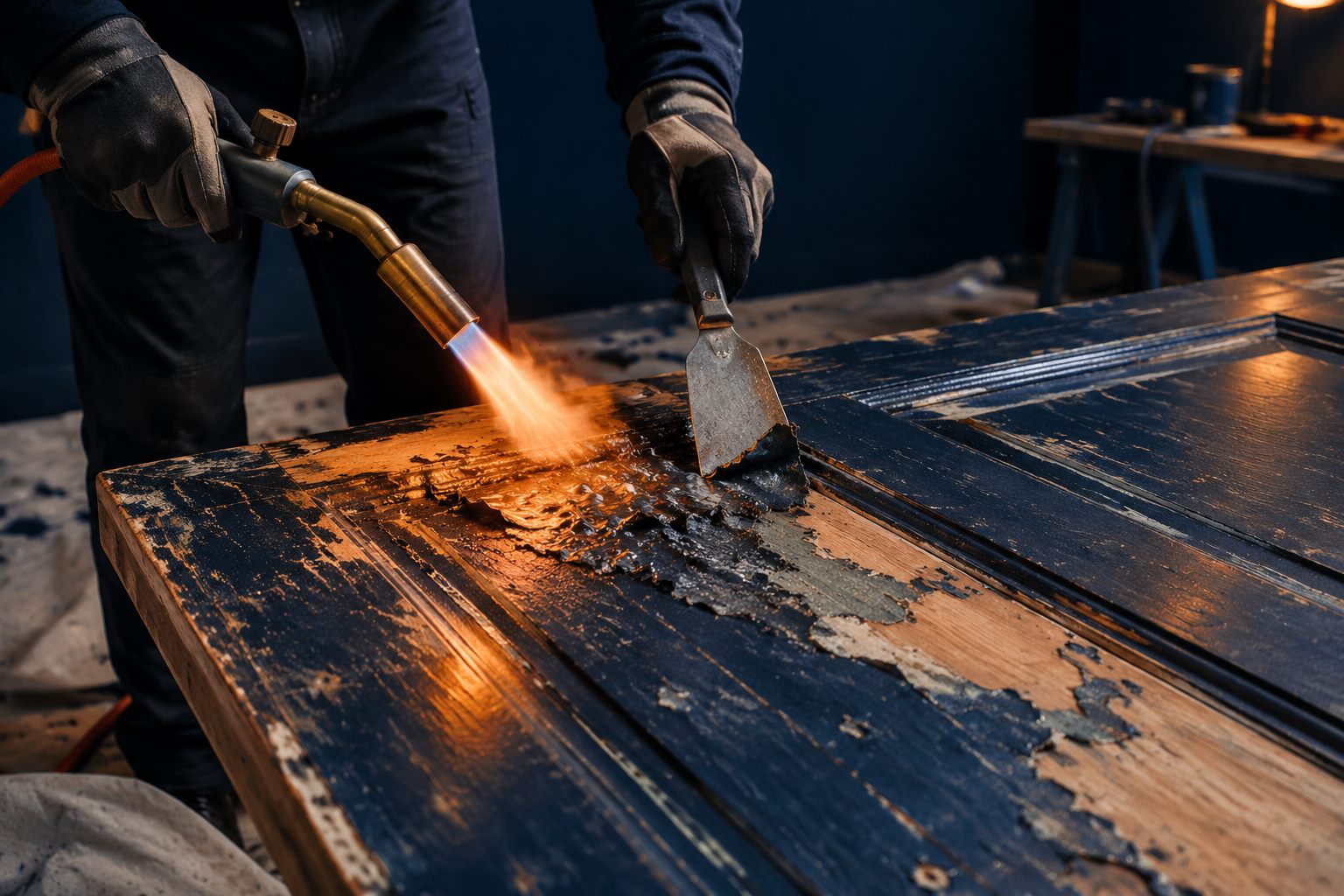
Dry-scraping old coatings chews the substrate and the patience. Softened paint lifts in strips — heat is what turns an afternoon into twenty minutes.
Application · Paint stripping & DIY
Half of workshop repair is controlled heat. Softening an old coat of paint so the scraper finally bites. Shrinking tubing and wrap evenly over a connector. Warming a seized fastener so the metal expands and lets go. Freeing a glued joint or a stuck fitting without prying it apart. These are short, targeted heat jobs — exactly what a hand-held flame torch does faster than waiting on a plugged-in tool.
The ZHENTANZHE recommendation for this category is the GF-8012 Standard Torch 8012: 60 cm of wand keeps the hand out of the heat zone, and the 860 g build is balanced for the sustained, repeated passes workshop work demands. The flame is adjustable and wind-resistant, rated up to ~1300°C and ~50 cm — full heat for softening paint, throttled down for delicate shrink work with one knob.
For hardware chains and renovation retailers the SKU slots beside heat guns rather than against them: the torch is the cordless, spot-heat answer, the gun is the broad-airflow answer, and many workshops carry both. The GF-8012 shares the line platform — electronic ignition rated 5,000+ ignitions, valve-linked auto shut-off, triple protection, -30°C to 30°C operating range — and leaves the Wenzhou factory after 20+ tests per unit, with TÜV, UL, CPSC and SGS certificates supporting market access.
Fuel canister not included — purchase locally per local regulations. Professional tool, not a toy: read the manual before use and keep away from children.
Professional tool, not a toy. Read the manual before use. Keep away from children. Fuel canister not included — purchase locally per local regulations.
The pain points
Dry-scraping old coatings chews the substrate and the patience. Softened paint lifts in strips — heat is what turns an afternoon into twenty minutes.
Heat guns need a socket and a long warm-up. For spot jobs in a garden, on a ladder or behind a workbench, an instant cordless flame is the practical answer.
Shrink tubing, heat-wrap and rust-welded fasteners are recurring workshop chores that need a few seconds of focused heat, not ten minutes of ambient warmth.
How it works
Whatever the task, the rule is identical: short passes, constant motion, clean work area. The jobs differ only in where the heat goes.
Heat a strip of coating until it blisters, then lift it with the scraper while warm — one section at a time, flame always moving. Scrape into a container, not onto the floor.
Throttle the knob down and rotate the work piece under a gentle flame so the material contracts evenly — no scorched spots, no under-shrunk centers.
Warm the seized metal so it expands, apply penetrating oil as it cools, then work the fastener. Heat-and-release beats force on rust-welded parts.
Clear flammables from the work zone first, ventilate the space, and never leave a lit torch on the bench unattended — the valve-linked auto shut-off cuts gas if the flame dies, but supervision stays on you.
Recommended model
Reach and duty cycle decide this category, and the 60 cm model is shaped for both.
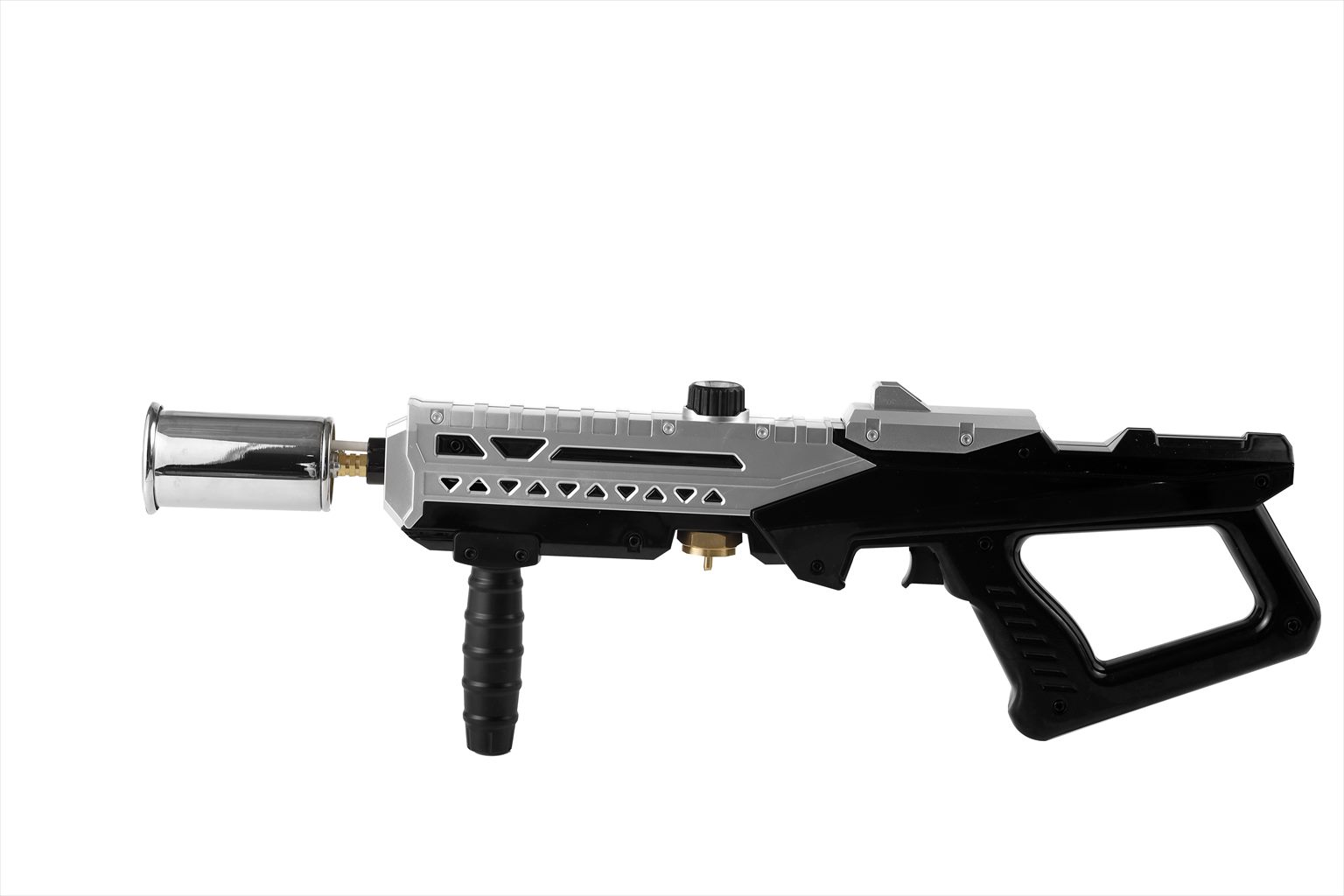
Workshop lead model
The 60 cm wand is not decoration — it is the distance between the user's hand and the hot workpiece, and it is why this model also carries the farm and industrial scenario. The 860 g build stays steady through long paint strips, and the same tool lights charcoal beds in the BBQ scenario, giving hardware shelves one SKU with three selling stories.
For smaller hobby-scale tasks the compact GF-8010 is the lighter alternative; for ground-level and fence-line distance work the GF-8016 extends the same platform to 76 cm.
Working data
| Parameter | Factory-rated value |
|---|---|
| Body length | 60 cm |
| Net weight | 860 g |
| Materials | ABS + brass + stainless tube + plated iron |
| Flame temperature | Up to ~1300°C |
| Flame length | Up to ~50 cm (±10 cm with altitude, pressure and temperature) |
| Flame control | Adjustable knob; wind-resistant flame |
| Ignition | Electronic, rated 5,000+ ignitions |
| Operating range | -30°C to 30°C |
| Runtime (450 g canister) | ~1 h on high flame; 3–4 h on low flame |
| Safety platform | Valve-linked auto shut-off; triple protection: flame-out + over-pressure + backfire prevention |
| Build | 304 stainless steel bite joint; HTXC1700 silicone sealant rated 1000°C+; aviation-grade heat-resistant ABS shell |
| Fuel canister | Not included — purchase locally per local regulations |
Safety notes
Professional tool, not a toy: read the manual before use and keep away from children. Clear solvents, sawdust, rags and packaging from the work area, and ventilate — heating paint and adhesives releases fumes.
On buildings with coatings old enough to contain lead, follow local guidance before any heat stripping — heating lead paint is a health hazard. Never point the flame at glass or let it dwell there; rapid localized heat can crack it.
Fuel canister not included — purchase locally per local regulations. Fit and remove the canister away from open flame and hot metal, and leak-check the joint as described in the manual before each session.
Switch off between tasks, rest the tool with the nozzle clear of bench clutter, and let it cool before storage. Hot workpieces stay hot long after the flame moves on — mark or leave them undisturbed.
FAQ
A torch gives a focused, instantly hot flame with no cord; a heat gun gives broad warm airflow with a plug. For spot work — softening a strip of paint, shrinking a length of tubing, freeing one seized fastener — the torch is the faster, more portable tool. Both demand the same discipline: keep the heat moving and clear the area of flammables.
The GF-8012 Standard Torch 8012. At 60 cm and 860 g it keeps the hand away from the heat and carries sustained workshop use, while the same wind-resistant flame rated up to ~1300°C stays adjustable for delicate jobs. The compact GF-8010 serves smaller hobby tasks.
With precautions, and honesty about limits. Ventilate the space, keep the flame moving so paint softens rather than burns, and never work toward a pocket of flammable material. On buildings with coatings old enough to contain lead, follow local guidance before any heat stripping — heating lead paint is a health hazard.
On a 450 g canister the factory rating is about 1 hour on high flame and 3–4 hours on low flame. Workshop passes are usually short bursts at medium settings. Fuel canisters are not included — purchase them locally according to your local regulations.
OEM/ODM starts from 500 pcs (100 pcs for in-stock models), delivery 15–20 days after deposit, sample fees credited against bulk orders. Customization covers logo printing, body colors, retail packaging, instruction-manual language and canister-interface adaptation.
Send quantity and target market — we reply with GF-8012 specifications, pricing, sample terms and lead time.